
Dental Sealants in South Lake Tahoe, CA
Prevent cavities before they start with protective dental sealants at The Smile Shop.
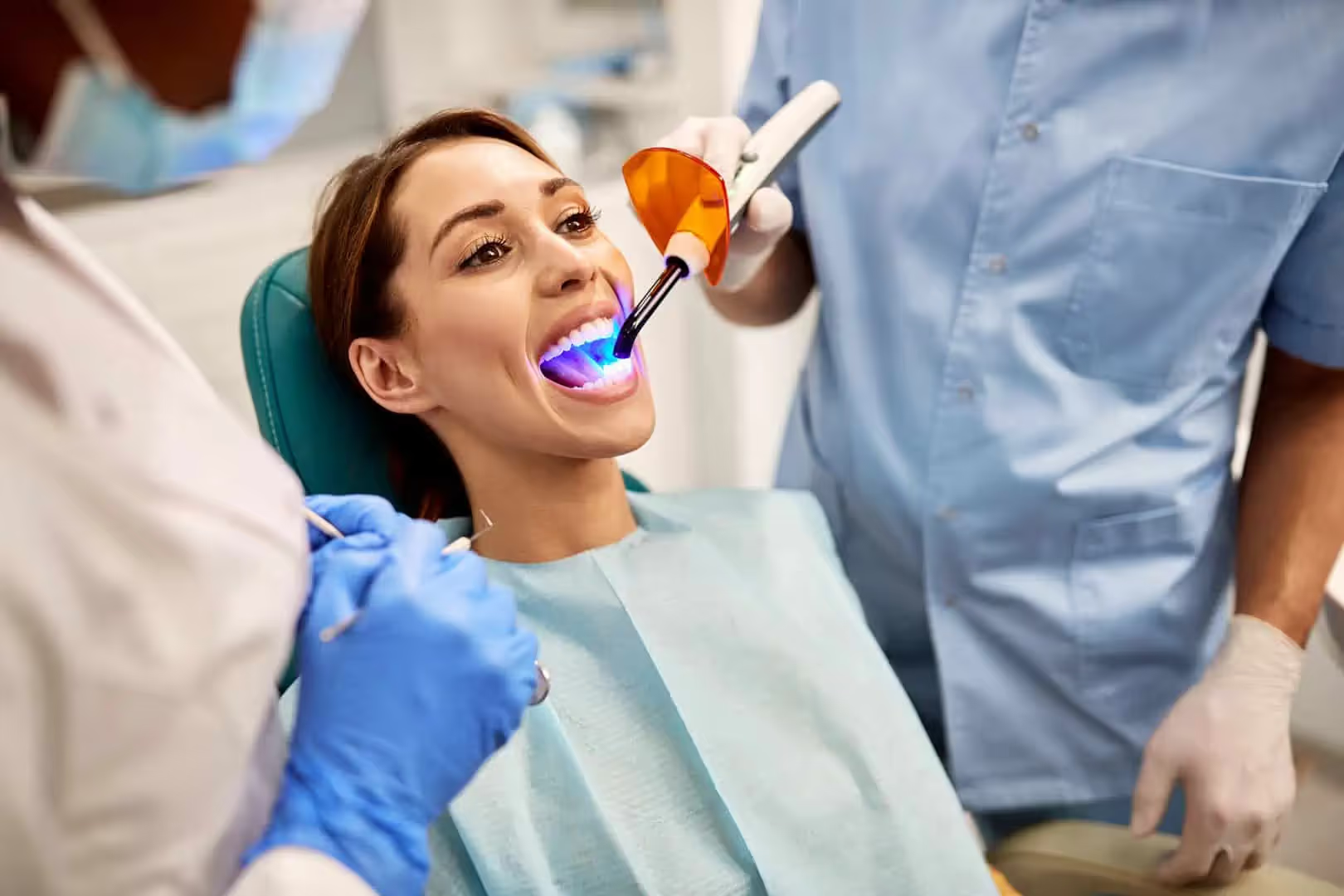
Protect cavity-prone teeth with preventive dental sealants at The Smile Shop South Lake Tahoe. Our dental team provides individualized preventive care for children, teens, and adults at our office on Lake Tahoe Boulevard.
Dental sealants create a thin protective barrier over the deep grooves of back teeth, where food particles and bacteria can be difficult to remove with brushing alone. Treatment is quick, does not require drilling when applied to healthy teeth, and can often be completed during a routine preventive visit.
Simple, Preventive Protection for Cavity-Prone Teeth
Dental sealants are protective coatings placed over the chewing surfaces of molars and premolars. These back teeth often have narrow pits and grooves where plaque, bacteria, and food particles can collect.
At The Smile Shop Tahoe, we use dental sealants as part of a personalized preventive care plan. Sealants do not replace brushing, flossing, fluoride, or professional dental care. Instead, they provide an additional layer of protection in areas that may be difficult to clean thoroughly.
Patients seeking dental sealants in South Lake Tahoe, CA can receive an examination to determine whether their teeth are healthy and suitable for treatment. We also welcome patients who travel to our South Lake Tahoe office from surrounding communities, including Kyburz, Tahoe City, Tahoe Vista, and Camino.
What Are Dental Sealants?
Dental sealants are thin resin coatings applied to the chewing surfaces of cavity-prone back teeth. The material flows into natural pits and fissures before hardening into a smooth protective layer.
Sealants are most commonly placed on permanent molars, although premolars and other teeth may also benefit when they have deep grooves. By covering these vulnerable areas, sealants can make it harder for food and bacteria to settle into the tooth surface.
Dental sealants are preventive rather than restorative. They do not repair an existing cavity. Before recommending treatment, the dentist examines each tooth for decay, previous fillings, crowns, and other conditions that may affect whether a sealant is appropriate.
Benefits of Dental Sealants
Dental sealants may:
- Help protect deep grooves in molars and premolars
- Reduce exposure to food particles and cavity-causing bacteria
- Support cavity prevention in areas that are difficult to brush
- Be placed without drilling when the tooth is healthy
- Complement fluoride treatments and daily oral hygiene
- Benefit children, teens, and selected adults
- Be completed during many routine preventive appointments
Sealants can be especially helpful for patients whose back teeth have pronounced pits or fissures. Their suitability depends on the condition of the tooth and the patient’s individual risk of decay.
How Dental Sealants Are Applied
1. Examination
The dentist first evaluates the tooth to confirm that it is free from decay and suitable for sealant placement. Existing fillings, crowns, bite conditions, and cavity risk may influence the recommendation.
Sealants are often discussed during routine cleanings and dental exams.
2. Cleaning and Preparation
The tooth is cleaned to remove debris from its chewing surface. It is then kept dry so the sealant can bond properly. A conditioning material may be applied briefly to prepare the enamel.
3. Sealant Placement
The liquid sealant is carefully brushed into the grooves of the tooth. The material is then hardened, commonly with a curing light, to create a protective coating.
4. Bite and Coverage Check
The dentist checks the treated tooth to make sure the material covers the intended grooves and that the patient’s bite feels comfortable.
How Long Does a Dental Sealant Appointment Take?
Sealants can often be applied during a scheduled preventive visit. The total appointment time depends on the number of teeth being treated, the patient’s cooperation, and whether the visit also includes an examination, cleaning, X-rays, or another preventive service.
Patients can generally return to normal activities after placement. The dental team will provide any instructions that apply to the specific sealant material used.
How Long Do Dental Sealants Last?
Dental sealants may remain in place for several years, but their lifespan varies. Bite pressure, tooth grinding, eating habits, oral hygiene, and the location of the treated tooth can all affect wear.
Sealants should be checked during regular dental visits. If a sealant becomes worn, chipped, or partially detached, the dentist may recommend repairing or replacing it. Continued monitoring helps ensure that the tooth remains clean and protected.
Who Is a Good Candidate for Dental Sealants?
Sealants may be recommended for:
- Children whose permanent molars have recently erupted
- Teens with deep pits or grooves in their back teeth
- Patients with a history of cavities
- People who have difficulty cleaning certain molars
- Adults with healthy, unrestored teeth that have cavity-prone grooves
- Patients who would benefit from additional preventive support
Children and teens are commonly evaluated for sealants as their permanent back teeth appear. Families can learn more about related preventive services through our children’s dentistry care.
Who May Not Be a Good Candidate?
Dental sealants may not be appropriate for:
- Teeth with active decay
- Teeth with large fillings or crowns
- Teeth with shallow grooves and a low risk of decay
- Teeth that cannot be kept dry during placement
- Patients who need restorative treatment instead of preventive care
A clinical examination is necessary because two patients of the same age may have different cavity risks and treatment needs.
Dental Sealants for Children and Teens
Permanent molars often have deep grooves that can be difficult for children to clean thoroughly. Applying sealants soon after these teeth erupt may help protect vulnerable chewing surfaces during cavity-prone years.
At Smile Shop South Lake Tahoe, recommendations are based on the child’s tooth development, dental history, oral hygiene, diet, and overall risk of decay. Sealants are not automatically necessary for every tooth or every child.
For families balancing school, sports, skiing, hiking, and other Tahoe activities, sealants can often be incorporated into an existing preventive appointment rather than requiring a separate treatment visit.
Can Adults Get Dental Sealants?
Adults may also qualify for dental sealants. Age alone does not determine candidacy.
An adult may benefit when a molar or premolar has deep grooves, remains free from decay, and does not already contain an extensive restoration. The dentist will examine the tooth before recommending treatment.
Sealants may be one part of a broader general dentistry plan in South Lake Tahoe designed around the patient’s current oral health and future preventive needs.
Dental Sealants vs. Fluoride Treatment
Dental sealants and fluoride treatments support cavity prevention in different ways.
Dental Sealants
Sealants create a physical barrier over the pits and grooves of selected teeth. They are most often applied to the chewing surfaces of molars and premolars.
Fluoride Treatment
Fluoride helps strengthen enamel and improve its resistance to acid exposure. Professional fluoride treatment may benefit multiple tooth surfaces rather than only the grooves of back teeth.
Can Sealants and Fluoride Be Used Together?
Yes. A dentist may recommend sealants, fluoride, or both depending on the patient’s cavity risk. The treatments are complementary rather than interchangeable.
Alternatives and Complementary Preventive Care
Sealants work best as part of a complete preventive routine. Other important measures include:
- Brushing twice daily with fluoride toothpaste
- Flossing or using another interdental cleaner
- Limiting frequent exposure to sugary or acidic foods and drinks
- Scheduling professional cleanings and examinations
- Receiving fluoride when clinically appropriate
- Addressing early signs of decay before they progress
Patients should continue brushing and flossing treated teeth. A sealant protects only the covered grooves and does not make the entire tooth resistant to cavities.
Cost of Dental Sealants in South Lake Tahoe, CA
The cost of dental sealants varies according to:
- The number of teeth treated
- The patient’s age
- The condition of the teeth
- Insurance or Medi-Cal eligibility
- Plan limitations and frequency rules
- Other services completed during the appointment
The Smile Shop can review available benefit information before treatment. Coverage is determined by the patient’s plan and does not guarantee that every recommended sealant will be paid in full.
Insurance and Medi-Cal Coverage
The Smile Shop accepts Medi-Cal and works with patients to clarify available dental benefits. Sealant coverage may depend on age, eligibility, tooth type, treatment history, and current program rules.
Patients can review our Medi-Cal dental information or contact the office before their appointment. Our team can help explain available information, although final coverage decisions are made by the applicable dental plan.
Safety, Risks, and Limitations
Dental sealants are widely used as a preventive treatment, but they have limitations.
Sealants may wear, chip, or detach over time. They do not treat existing decay, protect every surface of a tooth, or eliminate the need for daily oral hygiene. A cavity can still develop on an uncovered tooth surface or beneath a damaged sealant.
The dentist will monitor treated teeth during routine examinations and recommend repair, replacement, or another form of care when necessary.
Preventive Dentistry at The Smile Shop
The Smile Shop South Lake Tahoe provides preventive and general dental care for individuals and families throughout the Tahoe region. Dr. Tommy Rutner and Dr. Robert Rutner bring extensive education and clinical experience to the practice, with an emphasis on patient-focused treatment planning and the appropriate use of dental technology.
Patients are encouraged to ask questions about their options, expected benefits, limitations, costs, and preventive goals. You can meet Dr. Tom Rutner and learn more about his approach to care before your visit.
Serving South Lake Tahoe and Nearby Communities
The Smile Shop is located at 3461 Lake Tahoe Blvd, South Lake Tahoe, CA 96150. Our primary service area is South Lake Tahoe and the surrounding region.
We also welcome patients who choose to travel from:
- Kyburz, CA
- Tahoe City, CA
- Tahoe Vista, CA
- Camino, CA
- Meyers, CA
- Tahoma, CA
- Nearby Lake Tahoe communities
Our dental office is located only in South Lake Tahoe. References to nearby communities describe areas from which patients may travel and do not indicate additional practice locations.
Frequently Asked Questions
How much do dental sealants cost in South Lake Tahoe, CA?
The cost depends on the number of teeth treated, the patient’s age, and available insurance or Medi-Cal benefits. Coverage rules vary by plan and may include age or frequency limitations. The Smile Shop can review available benefit information and explain expected charges before sealants are placed.
Are dental sealants safe for children?
Dental sealants are commonly used to help protect children’s permanent molars from cavities. Before treatment, the dentist examines each tooth to confirm that it is healthy and appropriate for sealing. Sealants may wear over time, so treated teeth should still be checked during routine dental visits.
How long does it take to apply dental sealants?
Sealant placement is generally brief and can often be completed during a preventive appointment. The exact time depends on how many teeth are treated, whether the teeth can be kept dry, and what other services are scheduled. The process does not require drilling when placed on healthy teeth.
Can adults receive dental sealants?
Adults with healthy molars or premolars may qualify for sealants when the teeth have deep, cavity-prone grooves and do not contain extensive restorations. A dentist must evaluate the teeth first because existing decay, fillings, crowns, and bite conditions can affect candidacy.
Are dental sealants better than fluoride treatment?
Sealants and fluoride serve different purposes. Sealants cover the deep grooves of selected back teeth, while fluoride helps strengthen enamel across multiple tooth surfaces. One is not universally better than the other. A dentist may recommend either treatment or both based on the patient’s cavity risk.
Lorem ipsum dolor sit amet, consectetur adipiscing elit, sed do eiusmod tempor incididunt ut labore et dolore magna aliqua. Ut enim ad minim veniam, quis nostrud exercitation ullamco laboris nisi ut aliquip ex ea commodo consequat. Duis aute irure dolor in reprehenderit in voluptate velit esse cillum dolore eu fugiat nulla pariatur.
Proudly Serving South Lake Tahoe & Beyond
As a locally rooted dental practice, we’re proud to care for the people who make Tahoe the vibrant, outdoor-loving, tight-knit community it is. Whether you live in South Lake Tahoe or commute from nearby areas like Stateline, Meyers, Tahoma, Zephyr Cove, or Gardnerville, our team is here to welcome you with open arms — and clear answers.

.avif)